

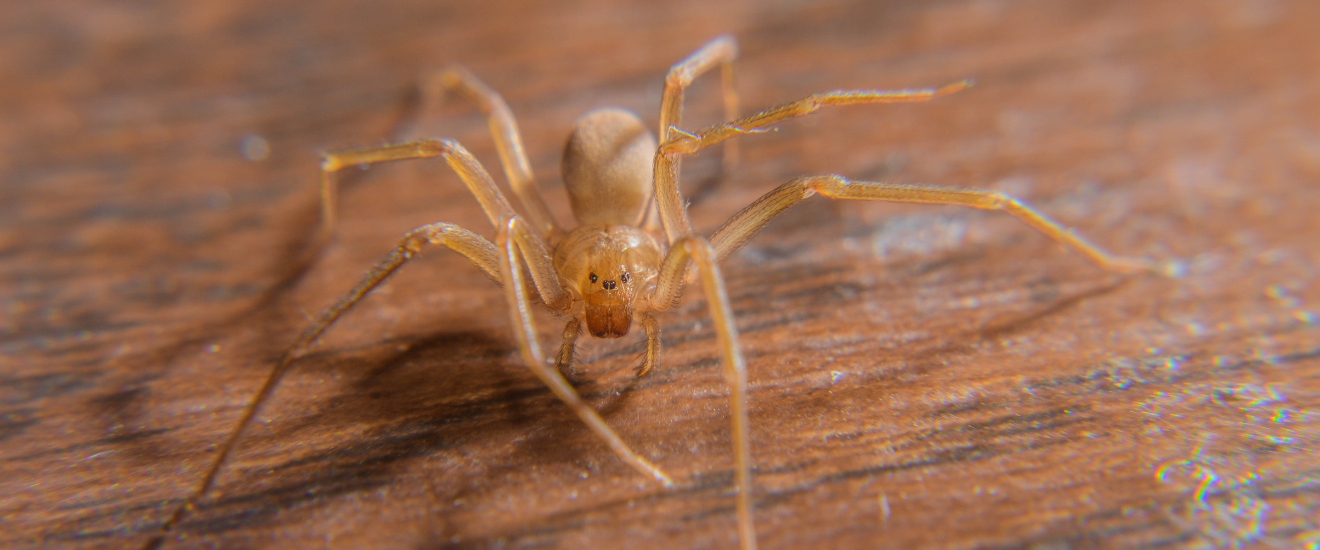
Brown recluse spiders can live in Bloomington homes for long periods without being noticed because they prefer quiet, protected spaces. Basements, closets, storage rooms, garages, attics, and crawl spaces can all provide suitable hiding areas, especially when boxes and belongings remain undisturbed. Homeowners who are finding spiders can use professional spider control in Bloomington to confirm the species and identify the areas where activity is concentrated.
Brown Recluse Identification Can Be Difficult
Brown recluse spiders are generally tan to brown and have a darker marking on the upper portion of the body that is often described as violin-shaped. That marking can be difficult to see, and several spiders found around Indiana homes have similar coloring.
Homeowners frequently mistake other brown spiders for brown recluses. Wolf spiders, house spiders, and other common species may have a similar general appearance from a distance. A clear photograph or an intact specimen can help a pest professional determine what you have found.
The pattern of sightings also provides useful information. Finding similar spiders in the same basement, storage room, or closet over time may indicate that suitable hiding areas and prey are present nearby.
Where Brown Recluse Spiders Hide Indoors
Brown recluse spiders prefer areas with limited disturbance. They can stay behind furniture, shelving, boxes, stored belongings, baseboards, and other protected surfaces for long periods.
Basements are a common place to find suitable hiding areas because homeowners often use them for storage. A dry corner behind shelves or boxes can remain untouched for months. Crawl spaces can offer similar shelter with very little regular activity.
Closets also deserve attention. Shoes, bags, seasonal clothing, linens, and boxes create narrow spaces where a spider can remain concealed. Guest rooms and storage rooms may provide the same conditions when they receive little day-to-day use.
Garages and sheds can become favorable hiding areas because they contain tools, cardboard, work gloves, lumber, and equipment that may sit in place for long periods. Attics add another layer of quiet storage, especially around holiday decorations and boxes that are opened only once or twice a year.
Cardboard and Clutter Create Hiding Places
Cardboard boxes create seams, folds, and narrow spaces between stored belongings. A spider can hide along an edge or behind a box without being visible during normal use of the room.
Clutter gives spiders additional protection. Clothing on the floor, stacked papers, bags, old furniture, and items pushed tightly against walls can create dozens of hiding places within a small area.
Replacing long-term cardboard storage with durable containers can make the area easier to inspect. Keep stored items slightly away from walls when possible and avoid filling every section of the floor. A clear perimeter allows you to spot spiders, shed skins, insects, and other pest activity sooner.
Regular cleaning also helps. Vacuum along baseboards, beneath furniture, behind shelving, and around storage areas. Moving belongings occasionally prevents quiet hiding spots from remaining untouched for years.
What Attracts Brown Recluse Spiders?
Brown recluse spiders stay where they can find shelter and food. They feed on insects and other small pests, so a steady supply of crickets, silverfish, beetles, cockroaches, or similar prey can support spider activity inside a home.
A basement with frequent cricket activity gives spiders a dependable food source. A garage that allows beetles and other insects to enter after dark can create another productive hunting area. Storage rooms may also hold insects that remain hidden beneath boxes and furniture.
Reducing the prey population can make indoor areas less favorable for spiders. Seal gaps around doors and windows, repair damaged screens, and address moisture problems that support insects. Vacuum dead insects and keep organic debris from accumulating in storage spaces.
Brown recluse spiders also benefit from quiet surroundings. A storage area with plenty of insects can support activity for a long time before anyone realizes spiders are present.
Pay Special Attention to Basements and Crawl Spaces
Bloomington homes with basements or crawl spaces can provide several conditions spiders use. Foundation cracks, vents, utility penetrations, and basement windows may allow insects and spiders to enter. Storage and low foot traffic create protected hiding areas once they are inside.
Brown recluse spiders often choose dry hiding areas, so inspect dry basement storage sections, framing, corners, and areas behind boxes. Moisture problems elsewhere in the basement still deserve attention because damp conditions can support silverfish, centipedes, cockroaches, and other spider prey.
Inspect around plumbing, HVAC equipment, foundation walls, and window wells. Look behind shelves and stored belongings instead of concentrating only on open floor areas.
Crawl spaces can be difficult to inspect safely. Tight access, exposed wiring, insulation, and uneven ground may make professional inspection a better choice.
Reduce the Places Brown Recluse Spiders Can Hide
Start by making storage areas easier to inspect. Remove unnecessary cardboard, organize belongings, and keep floors clear. Vacuum around walls, furniture, shelving, and other low-traffic areas.
Seal accessible cracks around windows, foundations, utility lines, and doors. Repair worn weatherstripping and damaged screens. Reducing cricket, silverfish, cockroach, and beetle activity can also remove food sources that support spiders.
Use caution when handling old boxes, lumber, decorations, and equipment that have been sitting untouched. Wearing gloves and checking items before moving them can reduce the chance of direct contact with a hidden spider.
Frequent brown recluse sightings deserve attention because these spiders can remain concealed in areas homeowners rarely inspect. Scott’s Termite & Pest Control can evaluate the rooms where activity is occurring, identify the spider, and recommend treatment based on the conditions in your home. If you are finding suspicious spiders in bedrooms, closets, garages, basements, or storage areas, schedule an inspection with Scott’s Termite & Pest Control to find out where they are hiding and how to reduce future activity.