

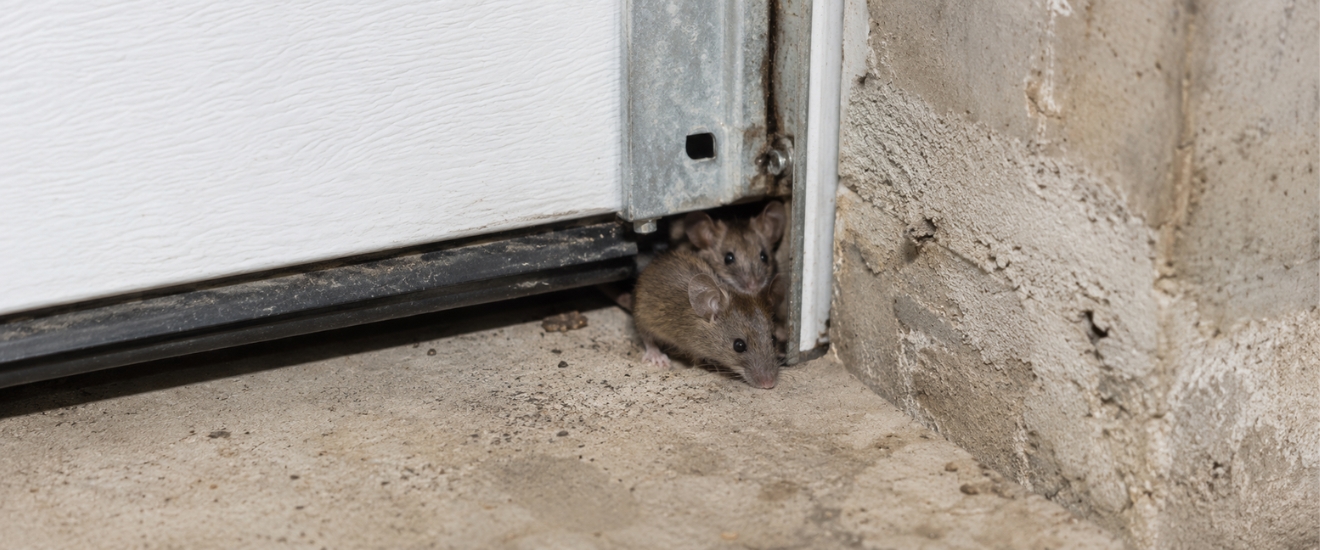
Mice often get into Bloomington homes through gaps that blend into the structure and receive little attention during routine maintenance. Openings around utilities, garage doors, foundations, vents, and rooflines can give a mouse access to protected areas inside. Professional rodent control in Bloomington can help locate these routes and determine whether mice are already using attics, crawl spaces, garages, basements, or walls. Scott’s specifically includes these areas in its residential rodent inspections and control services.
1. Garage Door Corners
A good place to start looking for rodent entry points is the garage. The bottom seal may look secure across most of the door and still leave openings at the corners. Gaps can also form between the side weatherstripping and the frame.
An attached garage is especially important because mice that reach it have already gained access to a protected part of the structure. Garages also tend to contain supplies that encourage them to stay. Birdseed, grass seed, pet food, cardboard boxes, pantry overflow, and trash can provide food and nesting materials. Close the garage door during daylight and look around the edges from inside. Visible light can reveal areas that need repair.
Keep stored food in durable containers with secure lids and leave enough open space along the walls to spot droppings or gnaw marks.
2. Gaps Along the Foundation
Mice moving through grass, mulch, leaf litter, and landscaping often travel along the base of a house. A foundation crack or gap where different building materials meet can give them an opening. Inspect the area between the foundation and the ground when looking for rodent entry points.
Bloomington homes with basements or crawl spaces may have additional transitions around access doors, basement windows, porches, additions, and siding. Walk slowly around the exterior. Look behind shrubs and stored items that block your view. Rodent droppings, gnawing, nesting debris, or a worn travel path may help identify the section of the foundation that needs closer attention.
3. Openings Around Utility Lines
Homes require many penetrations through exterior walls. Electrical wires, plumbing pipes, cable lines, gas lines, and HVAC equipment all need a route inside. The opening cut for the lines may be wider than the pipe or cable itself—leaving room for rodents to squeeze in. The sealants around these openings can also deteriorate over time.
Check around electrical, plumbing, cable, and gas lines when inspecting for rodent access. Inspect these openings both outside and inside when possible. Under-sink cabinets are particularly useful places to check. Follow plumbing pipes into the wall and look for open space around them. Laundry rooms, water heaters, utility rooms, and HVAC equipment deserve the same attention.
4. Crawl-Space and Attic Vents
Vents provide required airflow, so they cannot simply be sealed shut. They do need intact screening and secure covers. A crawl-space screen can tear or pull away from its frame. Attic vent screens can become damaged by weather, animals, or building maintenance.
Attic and crawl-space vents are among the areas homeowners should inspect for rodent entry points. A mouse entering a crawl space can follow pipes and wiring into walls. An attic entry gives the animal access to insulation, storage, and upper wall cavities. Inspect vents from the outside for visible damage. Inside the attic or crawl space, look for droppings, nesting material, disturbed insulation, and gnaw marks near suspected access points. Any repair should preserve proper ventilation.
5. Exterior and Basement Doors
A small gap beneath a door can create a direct route indoors. Basement doors, side doors, patio doors, and garage service doors often receive less attention than the main entrance. Weatherstripping wears out and door sweeps can pull away over time. Thresholds become damaged, and older doors may no longer sit evenly in their frames.
Take the time to inspect exterior doors, especially those without effective weatherstripping. Look at the closed door from inside during daylight. Light around the bottom or sides can help reveal the problem.
Leaves, tall vegetation, firewood, and outdoor storage near the doorway can also give mice cover while they investigate the structure. Keep these materials away from entry doors when possible.
6. Rooflines, Eaves, and Soffits
Ground-level inspections can miss openings several feet overhead. Mice are capable climbers and may reach roofs through trees, vines, rough surfaces, attached structures, and other routes. Because of this, it is important to inspect rafters, gables, eaves, soffits, and other roof areas when looking for rodent entry points. Look for loose soffit material, damaged vent screens, openings beneath fascia, and gaps where roof sections meet. Pay particular attention to additions, attached garages, porch roofs, and other transition areas. These sections can develop small construction gaps that are difficult to see from the ground.
Branches touching the roof should be trimmed when appropriate. Scratching in an attic can provide another clue that an elevated entry point is being used.
7. Gaps Behind Cabinets and Appliances
Some entry points are hidden inside the house. A mouse may enter through an exterior opening and then use gaps around kitchen plumbing, laundry connections, or appliances to reach a room.
Check under kitchen and bathroom sinks. Look behind a movable refrigerator, stove, dishwasher, washer, or dryer when it can be done safely.
Droppings near food packages, inside drawers or cupboards, and under sinks as common signs of rodent activity. In addition, shredded nesting material, chewed food packages, holes, and stale odors can help you identify the presence of rodents. A concentration of droppings around one cabinet can help guide the search.
Follow the Evidence to Find the Route
Mice often reveal their travel patterns before the entry opening becomes obvious. Droppings can show where they spend time. Gnaw marks may appear around food or an opening they are enlarging. Shredded paper, fabric, or plant material can indicate nesting.
Scott’s rodent service begins with an inspection to identify the rodent, determine how it is getting inside, and identify conditions attracting it to the property. The company then uses targeted control and provides exclusion recommendations designed to reduce repeat activity.
Finding and closing the right openings can stop the cycle of mice repeatedly entering a Bloomington home. Garage seals, utility penetrations, vents, foundations, doors, rooflines, and hidden interior gaps all deserve attention. If droppings, scratching sounds, gnaw marks, or sightings continue, schedule a rodent inspection with Scott’s Termite & Pest Control to identify where the mice are entering and develop a plan for removing them.